We are the most expert and reliable supplier of lattice steel structures for electric transmission towers in the region, supplying an optimized solution based on ASCE 10-15 and AISC 360-05 standards.
Our design, manufacturing, supply, and installation capabilities give us an unparalleled ability to be a comprehensive and competitive supplier in the electrical transmission market.
Towers can have a wide variety of shapes due to their geometry, function, and the voltage of the transported energy, as well as their sizes. Normal height ranges go from 20 meters to over 120 meters.
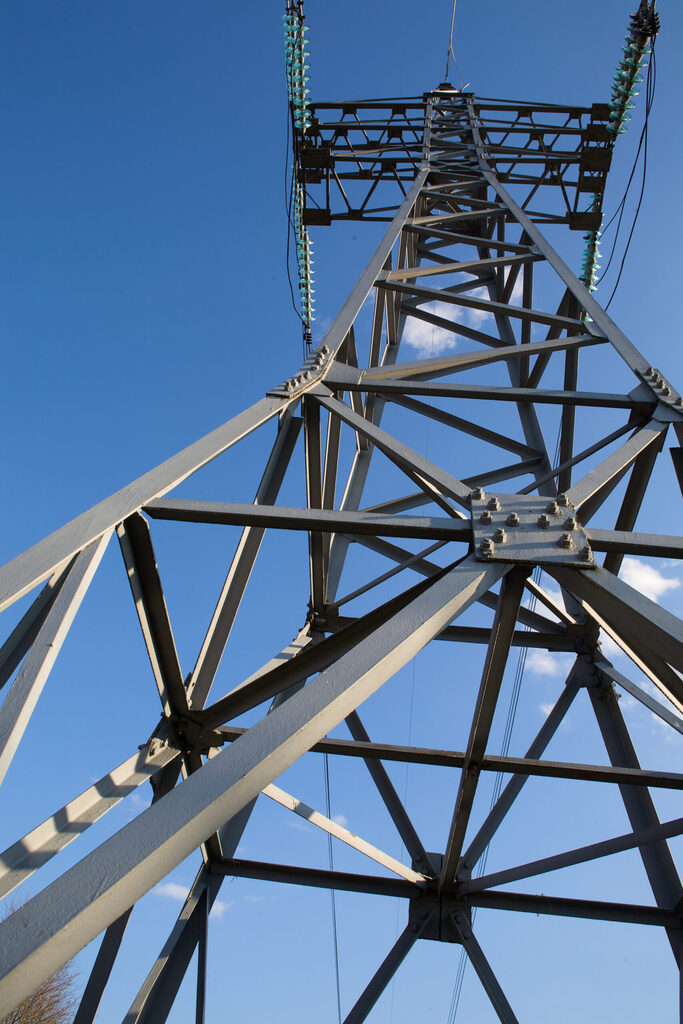
These structures are made using angle section steel profiles, are used for electrical lines of all voltages, and are the most common type for high-voltage transmission lines.
The factors to consider for its manufacturing are:
Geographic location of the site.
• Tower height and existing area for installation.
• Wind speed (region).
Loads that the structure will support.
• Number of transmission lines and their diameter.
The steel used is grade 36, 50, and 65.
• Stubs are used, which are a combination of angular components.
The hardware used is based on the ASTM A394 standard.
They are designed in specialized software.
Hot-dip galvanized per ASTM A123 standard.
Liquid paint or powder coating.
•Ease of transportation The elements that make up the towers are transported loose, taking up little space and making them easy to handle.
•Immediate manufacturing: With approved designs, the manufacturing and galvanizing process is very fast, to ensure timely deliveries.
•Assembly speed: The assembly with angles, plates, and screws to form sections is easily done with very little personnel and tools.
•Durability Because they are hot-dip galvanized, the towers offer greater durability, even in the most unfavorable conditions (industrial areas, marine environments).
•Lighter weight The towers are very light and therefore economical. The low weight implies savings in their foundations.
•Possibility of partial replacements: Easy and fast structural element changes when circumstances require it.
•Recyclables When demolishing them, the residual value of the material is still retained, as it is recoverable.